
Best Organic Puree Pouches for 2026
Organic puree pouches are the on-the-go solution to the starting-solids problem — pre-portioned, USDA-organic, no-added-sugar baby food that travels in a diaper bag without the spoon-feeding mess of jars. After a research-driven review against the AAP’s starting-solids guidance and verified manufacturer specifications, three picks stood out at distinct nutritional approaches: the Serenity Kids ($28 for an 8-pack, the protein-packed pouches with 5g of meat-based protein per serving from ethically-sourced farms), the Cerebelly ($29 for an 8-pack, the brand formulated around 16 brain-supporting nutrients per pouch per the manufacturer, with veggie-forward purees), and the Once Upon a Farm (about $2.50 per 3.2 oz pouch, the cold-pressed refrigerated organic option for parents who want the freshest preparation). Per the AAP HealthyChildren, baby should be sitting upright with full trunk support and showing readiness signals before any solids introduction around 6 months.
The hard truth most reviews skip: organic puree pouches are NOT all created equal. Some brands stuff fruit-heavy fillers (apple, pear, banana) into mostly-fruit pouches; others lead with vegetables, legumes, and protein for nutritionally balanced introductions. USDA Organic certification means no synthetic pesticides or GMOs but doesn’t mean nutritionally complete. The right answer depends on what nutritional gap the pouches need to fill. For homemade alternatives to store-bought pouches, see our baby food makers guide. For serving solids alongside pouches, see our suction plates and bibs guide. For safe feeding posture during pouch use, see our ergonomic high chairs guide.
The best organic puree pouches by nutritional approach
The right answer in the organic puree pouches category depends on the nutritional gap to fill: protein-packed for active toddlers, brain-development-nutrient-rich for science-backed parents, or cold-pressed refrigerated for fresh-preparation purists.
Safety first: organic puree pouches don’t replace whole-food experiences
Per AAP HealthyChildren starting solids guidance, organic puree pouches should supplement — not replace — whole-food feeding experiences where babies see, touch, and self-feed real foods. Pouches deliver nutrition but bypass the sensory and motor-skill development of finger foods, spoon-feeding, and family meals. Limit pouches to 1–2 per day as a convenience option (travel, daycare, on-the-go) and prioritize whole-food meals at home. Per the CDC Infant and Toddler Nutrition guidance, never let baby suck directly from pouch caps with the spout in their mouth (potential choking on the cap if torn loose); always squeeze pouch contents onto a spoon or directly into baby’s open mouth with parental supervision. Discard any opened pouch within 24 hours refrigerated. Always inspect pouches before serving for swelling, leaks, or off-odors that indicate spoilage. Never serve pouches to babies under 6 months without pediatrician approval.
How we evaluated organic puree pouches
Organic puree pouch reviews without standardized criteria are just opinion. We evaluated three picks against published standards and manufacturer documentation, covering ingredient quality, nutritional density, and value:
USDA Organic certification and ingredient list audits. Each product’s published labeling was checked against USDA Organic certification records and ingredient lists. Serenity Kids leads with protein (chicken, beef, turkey ethically-sourced from US farms) plus organic vegetables, healthy fats from avocado oil, and zero added sugars. Cerebelly leads with vegetables and fruits in combinations the brand formulates around 16 specific brain-supporting nutrients. Once Upon a Farm uses cold-pressed organic fruits and vegetables; the brand states that skipping thermal processing helps retain heat-sensitive nutrients. All three picks passed the no-added-sugar and no-fruit-juice-concentrate filters.
Nutritional density per pouch. Serenity Kids delivers 5g protein per pouch (highest in the guide, ideal for protein-introduction during BLW). Cerebelly is formulated to deliver 16 brain-supporting micronutrients per pouch, including iron, zinc, choline, and B-vitamins, per formulator Dr. Teresa Purzner (Stanford pediatric neurosurgeon). Once Upon a Farm leads with cold-pressed vegetables and fruits; the Green Kale & Apples pouch pairs organic kale and apples with tiny hemp seeds for plant protein and amino acids. All three offer fiber 1–3g per pouch.
Per-pouch cost across typical purchase quantities. Serenity Kids 8-pack at about $28 = roughly $3.56 per pouch. Cerebelly 8-pack at about $29 = roughly $3.62 per pouch. Once Upon a Farm single 3.2 oz pouch at about $2.50 per pouch (refrigerated cold-pressed processing). Cost differences reflect ingredient sourcing, processing methods, and brand positioning; all three sit well above mass-market per-pouch cost.
Organic puree pouches: side-by-side comparison
| Pick | Product | Key strengths | Watch-outs | Price | Where to buy |
|---|---|---|---|---|---|
| Top Pick |  Serenity Kids |
|
| ~$28 (8-pack) | Check price |
| Best Veggie-Forward |  Cerebelly Veggie and Fruit Variety Pack |
|
| ~$29 (8-pack) | Check price |
| Best Cold-Pressed | 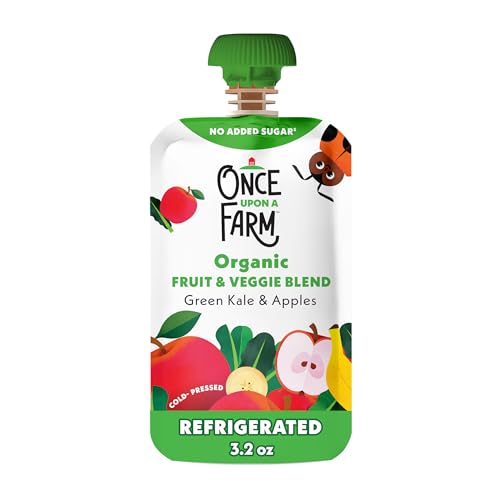 Once Upon a Farm Green Kale & Apples |
|
| ~$2.50 (3.2 oz pouch) | Check price |
Serenity Kids
Cerebelly Veggie and Fruit Variety Pack
Once Upon a Farm Green Kale & Apples
Serenity Kids — full review
Serenity Kids is the protein-packed leader among organic puree pouches — the brand was founded in 2017 by paleo-nutrition advocates Joe and Serenity Carr specifically to address the fruit-heavy filler problem in mainstream baby food. Most baby pouches lead with apple, pear, or banana to make vegetables taste sweeter; Serenity Kids leads with vegetables, ethically-sourced US farm meats, and avocado oil. Each 3.5oz pouch delivers 5g of protein from ethically-sourced chicken, beef, or turkey — among the highest protein per pouch in the category.
The protein content is the differentiator: 5g per pouch is well above most mainstream fruit-forward alternatives, contributing to iron and amino acid intake during the 6–12 month period when the AAP recommends iron-rich complementary foods. Avocado oil provides dietary fat, which the AAP notes is important for infant brain development. Zero added sugars and no fruit-juice concentrate mean less of the concentrated sugar load found in fruit-heavy pouches.
The trade-offs are real for the price tier. At about $3.56 per pouch (roughly $28 for an 8-pack), Serenity Kids sits at a premium that reflects ethical sourcing, meat protein integration, and small-batch organic processing. The strong meat flavor profile takes some babies time to accept; introduce gradually mixed with familiar fruits or vegetables baby already eats. The 8-pack format means smaller batch ordering than bulk multipacks. For families who prioritize protein introduction, ethical sourcing, and BLW-aligned nutrition, this is the right pick. Budget-prioritizing families should consider Cerebelly; refrigerated-fresh families should consider Once Upon a Farm.
Cerebelly Veggie and Fruit Variety Pack — full review
Cerebelly is the science-backed entry among organic puree pouches — the brand was founded by Dr. Teresa Purzner, a Stanford pediatric neurosurgeon and mom-of-three who formulated each recipe around 16 nutrients the brand identifies as supporting brain development at each stage. The shelf-stable 8-pack variety pack is vegetable-forward, prioritizing vegetables alongside fruits rather than fruit-heavy filler.
The 8-pack variety pack covers different vegetable and fruit combinations, exposing baby to several recipes across the pack. The recipes are designed for palate acceptance alongside nutrition. The 16 brain-supporting nutrients the brand formulates around include iron, zinc, choline, B-vitamins, and omega-3 ALA. Non-GMO Verified plus USDA Organic certification verified per Cerebelly’s third-party documentation.
The trade-offs are predictable for the value tier. No animal protein means lower per-pouch protein content than Serenity Kids (1–2g vs Serenity’s 5g) — meaningful difference for protein-introduction-focused families. The variety pack ships with a fixed flavor assortment that cannot be customized for picky eaters. Cerebelly is shelf-stable like most pouches, lacking the cold-pressed nutrient retention of Once Upon a Farm. For families who prioritize science-backed formulation and vegetable-forward nutrition, this is the right pick. Protein-prioritizing families should consider Serenity Kids; cold-pressed-purist families should consider Once Upon a Farm.
Once Upon a Farm Green Kale & Apples — full review
Once Upon a Farm Green Kale & Apples is the cold-pressed entry among organic puree pouches for parents who prioritize fresh preparation over shelf stability. Cold-pressing (also called high-pressure processing) is the genuine differentiator: the brand states that skipping thermal processing retains more heat-sensitive vitamins than traditional pasteurized pouches. This pouch pairs organic kale and apples with tiny hemp seeds, which the brand says add plant protein and key amino acids, with no added sugar and no preservatives or artificial ingredients.
The Green Kale & Apples blend is naturally sweet from apples, which makes the kale more palatable — a gentler introduction to leafy greens than a vegetable-only pouch, though more fruit-forward than a strict veggie-first option like Cerebelly. The brand states that cold-pressing helps retain vitamin C, folate, and other heat-sensitive nutrients better than heat-pasteurized alternatives; independent per-pouch nutrient-retention figures are not published, so treat that as a manufacturer claim. USDA Organic and Non-GMO Project Verified per Once Upon a Farm’s third-party certification.
The trade-offs are predictable for the cold-pressed processing requirement. These pouches must be kept refrigerated and used within a short window once received — less convenient than shelf-stable competitors that travel in any climate. This listing is a single 3.2oz pouch (about $2.50) rather than a bulk multipack, so families who want to stock up can order Once Upon a Farm’s cold-pressed variety multipacks separately. For families who prioritize fresh cold-pressed preparation and don’t mind refrigerated delivery, this is the right pick. Travel-heavy families should consider shelf-stable Cerebelly or Serenity Kids alternatives.
5 things to know about organic puree pouches
Pouches are a supplement to whole-food feeding, not a replacement
Per AAP HealthyChildren starting solids guidance, organic puree pouches should supplement whole-food feeding experiences where babies see, touch, and self-feed real foods. Pouches deliver nutrition but bypass the sensory and motor-skill development of finger foods, spoon-feeding, and family meals. Limit pouches to 1–2 per day as a convenience option (travel, daycare, on-the-go) and prioritize whole-food meals at home.
Read ingredient lists for fruit-heavy filler patterns
Many mainstream baby pouches list apple, pear, or banana as the first ingredient with vegetables in much smaller proportions — effectively making the pouch a fruit smoothie with vegetables for color. Vegetables-first or protein-first ingredient lists indicate genuinely nutritionally-balanced formulation. Serenity Kids leads with vegetables and meat; Cerebelly leads with vegetables; Once Upon a Farm balances fruit-and-vegetable proportions in a more fruit-forward way appropriate to flavor goals.
Never let baby suck directly from pouch caps
Per CDC Infant and Toddler Nutrition guidance, never let baby suck directly from pouch caps with the spout in their mouth. Pouch caps can detach and create choking hazards if torn loose during sucking. Always squeeze pouch contents onto a spoon, into a bowl, or directly into baby’s open mouth with parental supervision. The squeeze-onto-spoon method also lets you control portion pace.
USDA Organic doesn’t mean nutritionally complete
USDA Organic certification means no synthetic pesticides, no GMOs, no synthetic fertilizers in ingredient sourcing — important for reducing chemical exposure in babies whose smaller bodies are more vulnerable to pesticide residue. But USDA Organic doesn’t mean nutritionally balanced or appropriate for any specific stage. Always read ingredient lists and nutrition facts; USDA Organic is necessary but not sufficient for choosing quality organic puree pouches.
Discard opened pouches within 24 hours refrigerated
Per AAP and FDA food safety guidance, opened pouches should be refrigerated immediately and used within 24 hours. Bacterial growth in opened pouches happens even refrigerated; the 24-hour limit isn’t arbitrary. Once warmed for serving, use within 1 hour or discard. Never reheat partially-consumed pouches that baby has eaten from. Always inspect pouches before serving for swelling, leaks, or off-odors that indicate spoilage in shelf-stable packs.
Organic puree pouches: frequently asked questions
Per AAP HealthyChildren starting-solids guidance, around 6 months when baby begins solids. Baby should be sitting upright with full trunk support, showing interest in food, and have lost the tongue-thrust reflex before any solid food introduction. All three picks in this guide are rated for 6 months and up. Premature babies and babies with feeding difficulties should discuss timing with their pediatrician before starting solids of any form, including pouches.
USDA Organic reduces pesticide and synthetic chemical exposure during the critical first-year window when baby’s body is most vulnerable. Premium organic pouches like these run roughly $3–$5 per pouch versus $0.80–$1.50 for non-organic mainstream brands; the premium reflects organic sourcing plus added features (protein, brain-supporting nutrients, cold-pressed processing). For families on tight budgets, mixing a few organic pouches with homemade purees keeps the organic benefit affordable.
Per AAP starting-solids guidance, baby should eat a variety of textures and food forms during the 6–12 month window to develop self-feeding skills. Limit pouches to 1–2 per day; prioritize whole-food meals (mashed avocado, banana slices, scrambled egg, soft-cooked vegetables) at home. Pouches are appropriate for travel, daycare, and on-the-go use where whole-food preparation isn’t practical. Over-reliance on pouches can delay finger-food and spoon-feeding skill development.
No — per CDC Infant and Toddler Nutrition guidance, never let baby suck directly from pouch caps. Pouch caps can detach and create choking hazards if torn loose during sucking. Always squeeze pouch contents onto a spoon, into a bowl, or directly into baby’s open mouth with parental supervision. Once baby is around 12 months and developmentally ready, supervised pouch-sucking is acceptable but always with parent watching for cap integrity.
Both work. Homemade purees made with a baby food maker (see our baby food makers guide) cost $0.25–$0.40 per puree vs $3.50–$4.60 per organic puree pouch — significant savings for high-volume families. Pouches deliver convenience for travel, daycare, and rushed mornings. Most families use a hybrid approach: homemade purees for at-home meals, pouches for on-the-go situations. Don’t feel pressure to commit fully to either approach.
Shelf-stable pouches (Serenity Kids, Cerebelly) last 12–18 months unopened at room temperature per manufacturer dating. Cold-pressed pouches (Once Upon a Farm) require continuous refrigeration with a 4–6 week expiration window. Always check the printed expiration date and inspect for swelling, leaks, or off-odors before serving. Once opened, refrigerate immediately and use within 24 hours regardless of brand or processing method.
Our #1 pick: Serenity Kids
The protein-packed leader among organic puree pouches — 5g protein per pouch from ethically-sourced US farm meats, avocado oil for healthy fats, vegetables-first ingredient lists, zero added sugars, USDA Organic certified. The right choice for families prioritizing protein introduction and ethical sourcing during BLW.
Check price on Amazon →Medical disclaimer: Not medical advice. Starting solids should be discussed with your pediatrician, especially for babies with eczema, family allergy history, feeding difficulties, or developmental concerns. The information here is educational and reflects current AAP HealthyChildren guidance and CDC Infant and Toddler Nutrition guidance on starting solids. Never let baby suck directly from pouch caps. Discard opened pouches within 24 hours refrigerated. Always supervise meals. Consult HealthyChildren.org (AAP) and CDC Infant and Toddler Nutrition guidelines.
Prices: Reflect typical Amazon pricing as of April 2026 and may vary. Serenity Kids 8-pack is about $28.48 at the standard tier. Cerebelly Veggie and Fruit Variety Pack 8-pack is about $28.99 at the standard tier. Once Upon a Farm Organic Green Kale & Apples (3.2 oz pouch) is about $2.50 at the standard tier (refrigerated; cold-pressed). All three picks are USDA Organic certified per manufacturer documentation.
- Warshawsky ME. Foreign Body Aspiration. Medscape Drugs & Diseases (eMedicine); updated Mar 5, 2024. Foreign body aspiration can be a life-threatening emergency — a large object obstructing the airway can cause asphyxia — and the aspirated object is most often food.